Maybe these days you’re thinking about weaning yourself off of Google products and services. Recently, May First conducted a survey to better understand what the barriers are to people leaving Google products, especially gmail. They’ve released an early look at the findings (full report coming this month).
Some highlights:
- Lots of people have this question
- …but the #1 barrier is all of us
- Tech may be less of a barrier than itself
The survey received 450 responses (I was one of them), which was more than the organizers had estimated and reflects the intensity of interest in the topic. I was very excited to see this raised as a pragmatic question—the fact that the survey was trying to understand why people used these tools to me made it clear this is going to be an honest conversation and not just about the way we wish things were.
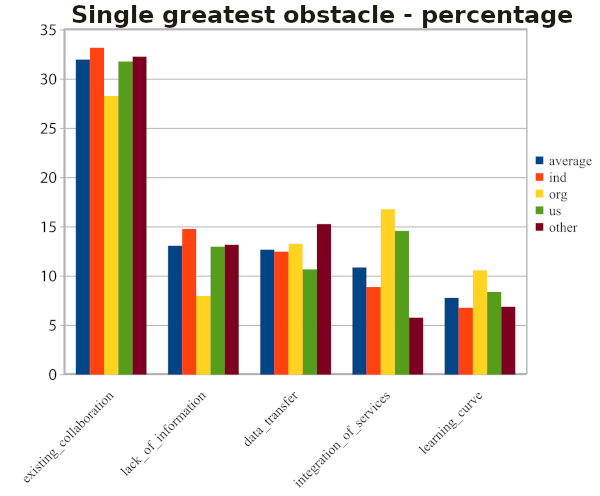
The we is pretty critical here though. By a long way, the top barrier listed was “existing collaborations,” meaning, all of us. We can’t get off these platforms cause we’re already on these platforms and even if one of us leaves, if the rest of us stay it just gets so difficult! I don’t think this result is a huge surprise, but it does underline why individual choices alone are not a solution. In addition, in reviewing the results, Jamie McClelland pointed out that tech-related reasons were reported as comparatively less of a barrier. This could indicate that the challenges with “cutting the cord” are less with training or functionality and more with, again, how we collectively are organized and collaborate.
In this survey update, they shared the audio from a presentation of the results and a transcription of the Q+A session that followed, which includes a lot of great tips and links to resources around secure communications, how to be conscientious about data acquisition and tracking, and related topics. It also included a shout out to the NP Dev Summit, which is a similarly great place to talk about the intersection of tech and values in a candid and aspirational way.
In the closing, another speaker (whose name I did not catch, sadly) explained how the movement tech providers are not looking to replace corporate providers but instead to offer “good functionality and great politics.” I’m excited to see the recommendations that come out from this research about how those of us who are still muddling through these questions can bring our politics into better alignment with how we organize our digital lives.
Last modified on February 11, 2025


